Market Guides
The Scandinavian Fragrance Market: Minimalist Trends and Opportunities
Este artículo aún no está disponible en español. Lo estás viendo en inglés.

The Scandinavian home fragrance market, encompassing Sweden, Norway, Denmark, and Finland, represents a distinctive and growing opportunity for B2B suppliers. With a combined population of 27 million and some of the world’s highest disposable incomes, Nordic consumers spend significantly on home ambiance products. The region’s design heritage, sustainability consciousness, and preference for understated luxury create a market that rewards quality and authenticity over volume.
Market Size and Growth
The combined Nordic home fragrance market is valued at approximately EUR 620 million (2024), with steady growth of 5-7% annually:
- Sweden: EUR 240 million (largest market, driven by strong retail infrastructure)
- Denmark: EUR 165 million (design-led premium segment)
- Norway: EUR 130 million (high per-capita spending)
- Finland: EUR 85 million (growing rapidly from a smaller base)
The scented candle segment alone accounts for EUR 210 million, with reed diffusers at EUR 175 million and electric diffusers at EUR 120 million. Growth is strongest in the premium segment (products above EUR 25), which expands at 10-12% annually.
Consumer Preferences: The Nordic Aesthetic
Scandinavian fragrance preferences are shaped by climate, culture, and design philosophy:
Scent profiles: Nordic consumers favor clean, natural, and understated scents. Top-performing fragrance families include:
- Fresh and clean: linen, cotton, rain, sea air
- Light woody: birch, pine, cedar, driftwood
- Subtle botanical: lavender, wildflower, moss, fern
- Warm minimal: vanilla, amber, cashmere (used sparingly)
- Seasonal: cinnamon and clove (Jul/Christmas), lingonberry, cardamom
Heavy oriental, intense oud, or overly sweet fragrances underperform. The Nordic preference is for scents that evoke nature, cleanliness, and hygge (cozy comfort).
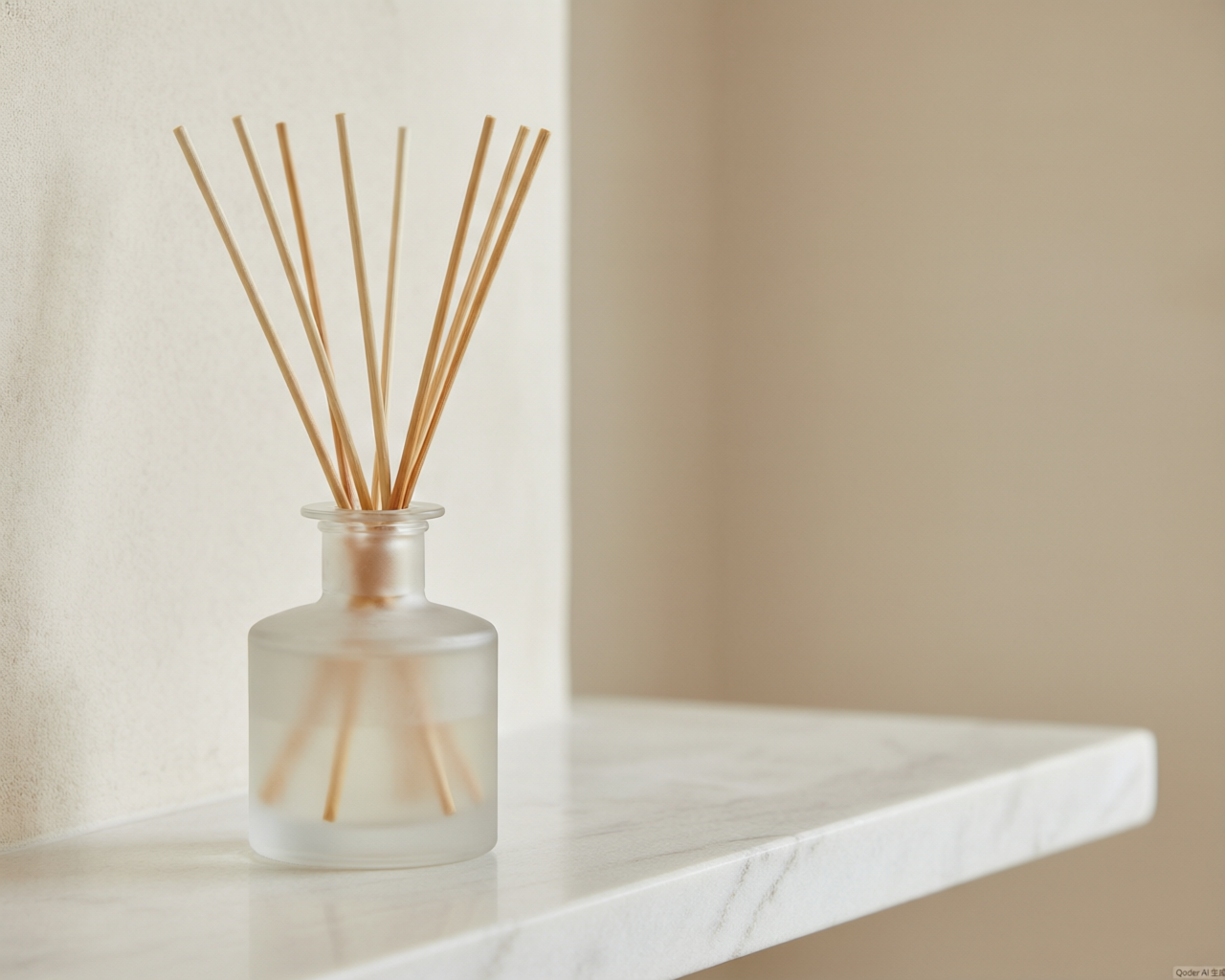
Design minimalism: Packaging and vessel design must align with Scandinavian aesthetics: clean lines, muted colors (white, grey, sage, terracotta), natural materials (wood, ceramic, matte glass), and uncluttered typography. Ornate or flashy designs are counterproductive.
Sustainability as baseline: Nordic consumers expect sustainability as a default, not a premium feature. Key expectations include:
- Natural waxes (soy, rapeseed, coconut) over paraffin
- Recyclable or reusable packaging
- FSC-certified paper and cardboard
- Phthalate-free and vegan formulations
- Transparent ingredient disclosure
- Carbon-neutral shipping options
Functional wellness: Aromatherapy positioning resonates strongly. Products marketed for specific moods (relaxation, focus, sleep) with essential oil blends perform well, particularly in Sweden and Finland where wellness culture is deeply embedded.
Distribution Channels
Design and lifestyle retail: The dominant channel for premium home fragrance. Key retailers include:
- Sweden: Åhlens, NK (Nordiska Kompaniet), Designtorget, Lagerhaus
- Denmark: Illums Bolighus, Hay, Normann Copenhagen retail
- Norway: Tilbords, Kremmerhuset, Bolia
- Finland: Stockmann, Marimekko lifestyle stores, Finnish Design Shop
Home furnishing chains: IKEA (Sweden), JYSK (Denmark), and Clas Ohlson carry accessible home fragrance lines at volume. These buyers require competitive pricing and consistent supply.
Specialty fragrance retailers: Independent boutiques in Stockholm, Copenhagen, Oslo, and Helsinki carry niche and imported brands. Multi-brand concept stores seek differentiated products with strong stories.
E-commerce: Online accounts for 30-35% of Nordic home fragrance sales, among the highest rates in Europe. Key platforms include Amazon.se, CDON, and brand DTC sites. Nordic consumers expect fast delivery (1-3 days) and easy returns.
Hospitality and commercial: Nordic hotels (Scandic, Nordic Choice, Radisson Blu) and offices invest in ambient scenting. The commercial channel values subtlety and consistency.
Pricing and Margins
| Product | Entry (EUR) | Mid-Range (EUR) | Premium (EUR) |
|---|---|---|---|
| Scented candle (200g) | 5-12 | 15-35 | 40-80 |
| Reed diffuser (100ml) | 6-14 | 18-40 | 45-90 |
| Room spray | 5-10 | 12-28 | 30-55 |
| Gift set | 12-25 | 30-60 | 70-150 |
Nordic consumers accept premium pricing for verified quality and sustainability. A soy candle with FSC packaging and a compelling scent story can command EUR 35-50 retail, supporting strong margins for importers sourcing at FOB USD 3-6.
Regulatory Framework
All four Nordic countries are EU members (Sweden, Denmark, Finland) or EEA members (Norway), applying the same core regulations:
- EU Cosmetics Regulation (EC) 1223/2009: For personal fragrance products
- REACH (EC) 1907/2006: Chemical substance registration
- CLP Regulation (EC) 1272/2008: Hazard labeling for mixtures
- General Product Safety Regulation (EU) 2023/988: Consumer product safety
- EU Ecolabel and Nordic Swan: Voluntary certifications that significantly boost retail acceptance
Additional Nordic considerations:
- Sweden’s Kemikalieinspektionen (Chemicals Agency) actively enforces REACH and CLP compliance
- Norway applies EU regulations through EEA agreement, with additional requirements from the Norwegian Environment Agency
- Denmark’s EPA (Miljostyrelsen) publishes guidance on fragrance allergens and may restrict substances beyond EU minimums
- All markets require labeling in the local language (Swedish, Danish, Norwegian, Finnish)
Sustainability Certifications That Matter
Nordic buyers prioritize products with recognized certifications:
- Nordic Swan Ecolabel: The most recognized sustainability mark in the region
- EU Ecolabel: Broadly accepted across all four markets
- FSC/PEFC: For paper and wood packaging components
- ECOCERT/COSMOS: For natural and organic formulations
- Vegan Society: Confirms no animal-derived ingredients
- B Corp: Increasingly valued by premium retailers
Sourcing from China: Practical Considerations
- Ocean transit: 30-38 days from Shanghai/Ningbo to Gothenburg (Sweden) or Hamburg (Germany, then overland)
- Freight costs: USD 2,200-4,200 per 40-foot container (2025)
- EU import duty: 0% for candles (HS 3406), 6.5% for room deodorizers (HS 3307)
- VAT rates: Sweden 25%, Denmark 25%, Norway 25%, Finland 24%
- Key entry ports: Gothenburg (Sweden), Copenhagen/Malmö (Denmark), Oslo (Norway), Helsinki (Finland), or Hamburg/Rotterdam for consolidated EU entry
Market Entry Strategy
- Lead with sustainability: Position natural wax, clean ingredients, and eco-packaging as standard features, not add-ons.
- Design for Nordic aesthetics: Invest in minimalist packaging with muted palettes and natural textures.
- Obtain certifications: Nordic Swan or EU Ecolabel certification opens doors with major retailers.
- Start with Sweden or Denmark: These markets have the most developed retail infrastructure and buyer networks.
- Attend Formex (Stockholm): Scandinavia’s leading design and lifestyle trade fair, held twice yearly.
- Provide multi-language documentation: Swedish, Danish, Norwegian, and Finnish labeling for regional distribution.
Conclusion
The Scandinavian market rewards suppliers who understand that Nordic consumers buy values as much as products. Sustainability, minimalism, and quality are non-negotiable entry requirements. B2B suppliers who meet these standards with properly certified, beautifully designed products can build premium-positioned brands in a market where consumers willingly pay more for products that align with their values.
Aromiso offers Nordic-market-ready products featuring soy and rapeseed wax blends, FSC-certified packaging, phthalate-free formulations, and minimalist design options. We support EU Ecolabel documentation and provide multi-language labeling for all four Nordic markets.