Market Guides
Private Label Fragrance for Australian Brands: China Sourcing Guide
Este artículo aún no está disponible en español. Lo estás viendo en inglés.

Australian fragrance brands are increasingly turning to Chinese manufacturers for private label production. The economics are compelling: a 200g scented candle produced in Guangdong at USD 3.00-5.00 FOB lands in Sydney at AUD 5.50-8.00 all-in, enabling retail pricing of AUD 28-42 with gross margins above 70%. This guide covers how Australian brands can build and manage a private label fragrance supply chain from China.
Market Context
Australia’s home fragrance market reached AUD 680 million in 2024, with independent and emerging brands capturing an estimated 25-30% of sales through DTC channels, boutique retail, and marketplaces. These brands typically lack in-house manufacturing capability and rely on contract production.
Domestic Australian contract manufacturers charge AUD 9-16 per unit for small-batch candle production (under 1,000 units). Chinese factories offer equivalent specifications at 40-55% lower cost, even after freight and duty. The trade-off is longer lead times (8-12 weeks door-to-door versus 2-4 weeks domestically) and higher minimum order quantities.
Product Development Process
Building a private label fragrance range with a Chinese factory typically follows this sequence:
Stage 1: Brief and concept (Week 1-2) Define your product specifications: wax type (soy, coconut-soy, beeswax blend), vessel (glass jar, tin, ceramic), fragrance direction, target burn time, and packaging requirements. Provide reference products or mood boards if available.
Stage 2: Fragrance selection (Week 2-4) Review the factory’s existing fragrance library or commission custom blends. Most established Chinese factories maintain 200-500 stock fragrances. Custom development adds USD 300-800 per fragrance in perfumer fees and 3-4 weeks of iteration. Request 10ml samples of shortlisted fragrances for evaluation in your target wax base.
Stage 3: Sampling (Week 4-7) The factory produces 3-5 sample units per SKU for your evaluation. Evaluate cold throw (unlit scent), hot throw (burning scent), wax appearance, wick performance, and vessel quality. Expect 2-3 sampling rounds before approval. Sample costs: USD 50-150 per SKU plus express courier (USD 40-80 to Australia via DHL).
Stage 4: Compliance and labeling (Week 6-9) Finalise GHS-compliant labels with your Australian importer details, hazard information, and batch coding. Your factory should provide the fragrance SDS and CLP/GHS classification data. Confirm AICIS registration status for all chemical components.
Stage 5: Production (Week 9-14) Production lead time is 25-40 days depending on order complexity. Standard products with stock components ship faster. Custom vessels, specialty packaging, or hand-finished details extend timelines.
Stage 6: Shipping and delivery (Week 14-19) Sea freight from Shenzhen, Ningbo, or Shanghai to Sydney or Melbourne takes 18-25 days. Add 5-10 days for customs clearance and inland delivery. Total door-to-door: approximately 10-14 weeks from order confirmation.
Minimum Order Quantities
Chinese factory MOQs for Australian private label orders:
| Product | Standard MOQ | Custom Development MOQ |
|---|---|---|
| Scented candles (glass jar) | 500-1,000 per SKU | 2,000-3,000 |
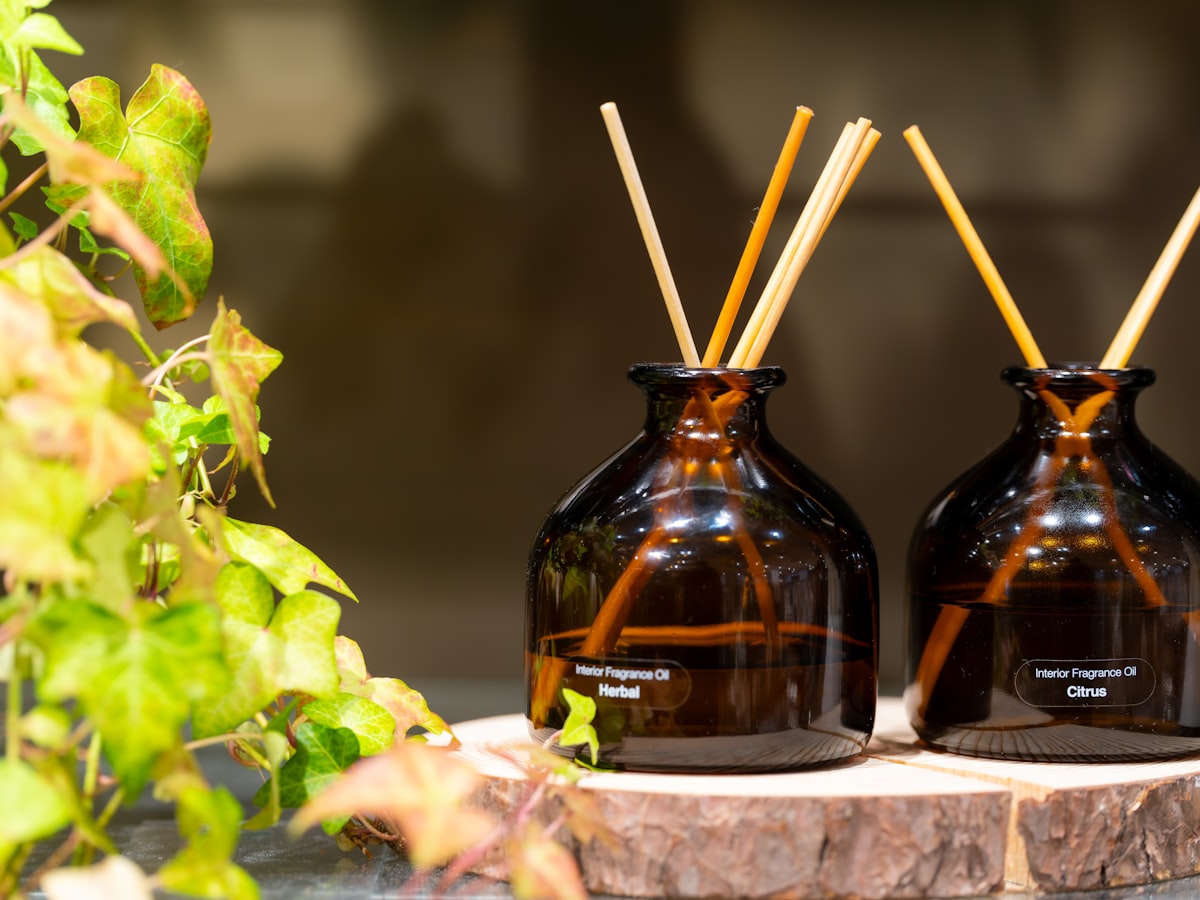
| Reed diffusers | 1,000 per SKU | 2,000-3,000 |
| Room sprays | 1,000-2,000 per SKU | 3,000 |
| Wax melts | 1,000-2,000 per SKU | 3,000 |
| Car diffusers | 2,000 per SKU | 5,000 |
For a launch range of 4-6 candle SKUs at 500 units each, expect a total first order of 2,000-3,000 units. At an average FOB of USD 3.80, that represents a factory investment of USD 7,600-11,400 (AUD 11,500-17,200) before freight.
Margin Structure
Detailed margin analysis for an Australian brand selling a 250g soy candle:
| Component | AUD per unit |
|---|---|
| FOB factory cost | 5.00-7.00 |
| Sea freight (per unit, 2,000 unit shipment) | 0.70-1.10 |
| Import duty (5%) | 0.28-0.40 |
| GST (10%, recoverable) | 0.60-0.85 |
| Customs broker and port charges | 0.20-0.40 |
| Landed cost | 6.78-9.75 |
| Wholesale price (to retailers) | 14.00-18.00 |
| Retail price (DTC or boutique) | 29.95-39.95 |
| DTC gross margin | 70-77% |
| Wholesale gross margin | 46-54% |
Australian Compliance Requirements
Before selling private label fragrance products in Australia, ensure:
- AICIS registration: Your business must be registered as an industrial chemical importer. Annual fee: AUD 385 minimum.
- GHS labeling: All hazardous mixtures (most scented products) require GHS-compliant labels with pictograms, signal words, and hazard/precautionary statements per Australian WHS Regulations.
- Australian Consumer Law: Products must be safe, accurately described, and carry your Australian business name and address.
- Country of origin labeling: “Made in China” must appear on the product or packaging.
- Net content: Displayed in metric units (grams or millilitres).
- Therapeutic claims: Avoid any language suggesting health benefits unless TGA-registered.
Choosing the Right Factory
Evaluate Chinese manufacturers on these criteria:
- Export experience to Australia: Ask for references from existing Australian clients. Factories experienced with AU shipments understand AICIS documentation and GHS Rev 7 labeling.
- Fragrance development capability: In-house perfumers or partnerships with fragrance houses (Givaudan, Firmenich, IFF) indicate serious R&D capacity.
- Certifications: ISO 9001 (quality management), BSCI or Sedex (social compliance), and IFRA membership (fragrance safety).
- Quality control infrastructure: On-site burn testing, fragrance throw evaluation, and pre-shipment inspection protocols.
- Communication: English-speaking sales team with response times under 24 hours. Time zone alignment (China is 2-3 hours behind eastern Australia) facilitates real-time collaboration.
Managing the Relationship Long-Term
Successful Australian brands structure their China supply partnerships for longevity:
- Quarterly forecasting: Share 3-month rolling sales forecasts so the factory can reserve production capacity and pre-purchase raw materials.
- Annual pricing agreements: Lock in unit prices for 12 months with adjustment clauses tied to soy wax and fragrance oil commodity indices.
- Dual sourcing: Maintain a secondary factory relationship for supply continuity, even if 80% of volume goes to your primary supplier.
- Quality agreements: Document acceptable defect rates (under 2%), inspection protocols, and rejection/credit procedures in a signed quality manual.
- Seasonal planning: Place Christmas orders by May for September delivery. Australian winter (June-August) orders should be confirmed by March.
Growth Pathways
Once your initial range is established, Chinese factories can support expansion into:
- Seasonal limited editions (Christmas, Mother’s Day, winter collections)
- Complementary product lines (reed diffusers, room sprays, linen mists)
- Retailer-specific exclusives (custom ranges for Myer, Adairs, or Peters of Kensington)
- Subscription box partnerships requiring 500-1,000 unit monthly runs
- Corporate gifting programs with branded packaging
The Australian private label fragrance market rewards brands that combine distinctive Australian-inspired scent stories with reliable supply and consistent quality. Chinese manufacturers that understand these brand values and deliver on compliance and communication become long-term partners rather than interchangeable vendors.