Market Guides
The Polish Fragrance Market: A Growing Opportunity for Suppliers
Este artículo aún no está disponible en español. Lo estás viendo en inglés.
Poland has emerged as one of Central Europe’s most dynamic consumer markets, and the home fragrance segment is no exception. With 38 million consumers, rising disposable incomes, and rapid adoption of Western European lifestyle trends, Poland presents a compelling growth story for B2B fragrance suppliers seeking markets with volume potential and lower competitive saturation than Germany or France.
Market Size and Trajectory
The Polish home fragrance market reached approximately PLN 2.1 billion (EUR 490 million) in 2024, growing at 9.2% year-over-year. This outpaces the EU average of 5-6% and reflects a market still in its expansion phase. Per-capita spending on home fragrance in Poland stands at roughly EUR 13, compared to EUR 28 in Germany and EUR 35 in France, indicating significant headroom for growth.
Key segment breakdown:
- Scented candles: 42% of market value, driven by strong seasonal gifting culture (Christmas, Easter, Women’s Day on March 8)
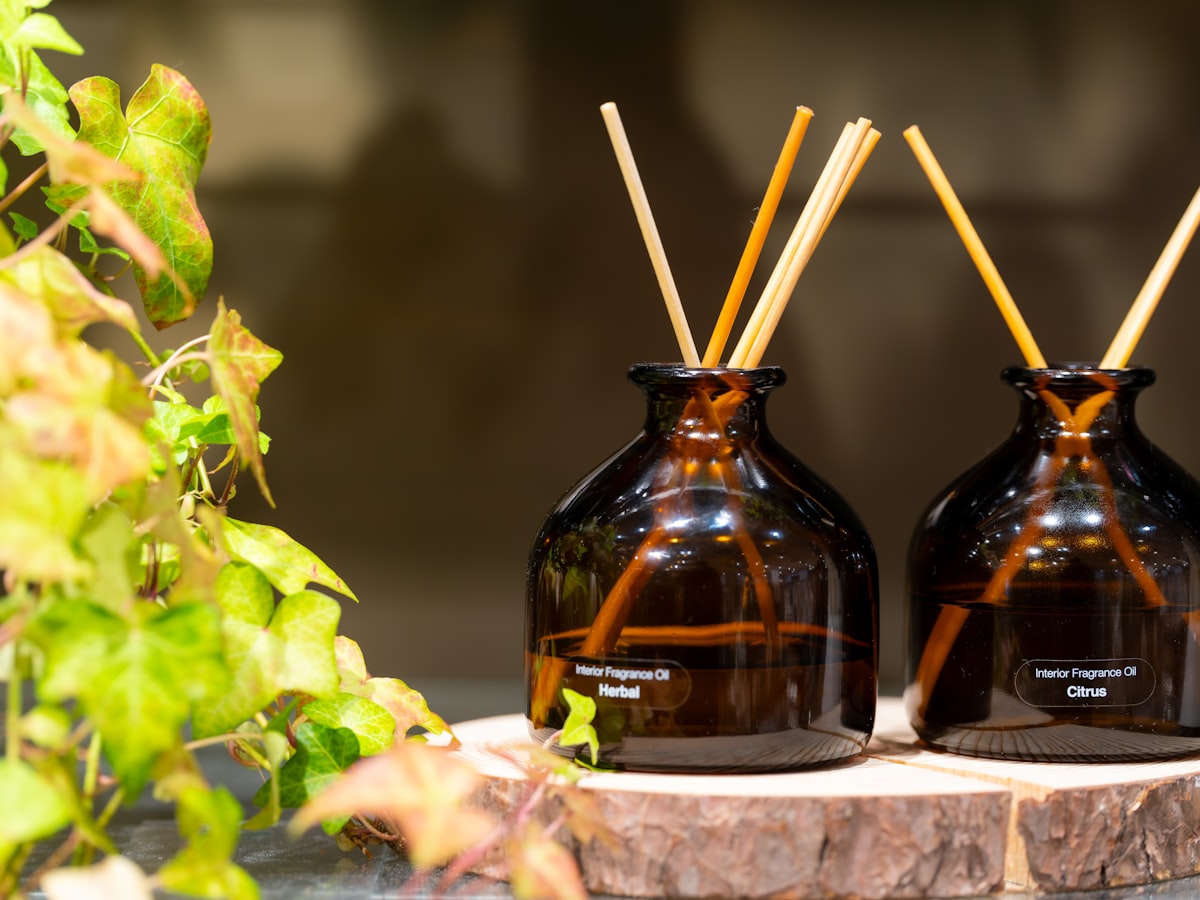
- Reed diffusers and room sprays: 31%, with the fastest growth rate at 12% annually
- Electric diffusers and essential oils: 15%, boosted by wellness and aromatherapy trends
- Car fragrances and other formats: 12%
Projections from Euromonitor and local trade associations suggest the market will exceed EUR 700 million by 2027, with premium segments growing at 14-16% CAGR.
Consumer Profile and Preferences
Polish home fragrance consumers skew younger and more urban than their Western European counterparts:
- Demographics: Core buyers are women aged 25-45 in cities with populations above 100,000. Warsaw, Krakow, Wroclaw, and Gdansk account for 45% of premium segment sales.
- Scent preferences: Fresh and clean accords dominate (linen, cotton, sea breeze), followed by fruity-floral compositions. Woody and oriental scents are gaining traction among male consumers and younger demographics.
- Price sensitivity: The mass market clusters around PLN 20-50 (EUR 4.50-12) retail for candles and PLN 30-70 (EUR 7-16) for diffusers. The premium segment (above PLN 100) is growing but remains under 15% of volume.
- Purchase drivers: Scent strength and longevity rank first, followed by packaging aesthetics and brand trust. Polish consumers are increasingly label-literate and check for natural ingredient claims.
Distribution Landscape
Poland’s retail structure offers multiple entry points for B2B suppliers:
Drugstore chains: Rossmann (1,700+ stores) and Hebe (300+ stores) dominate mass-market fragrance distribution. These chains operate centralized buying offices and typically require EDI capability, Polish-language packaging, and minimum annual volumes of 10,000+ units per SKU.
Home decor retailers: Pepco, Action, Tedi, and Jysk have expanded fragrance assortments aggressively since 2022. They source primarily through buying groups and import agents, with order volumes of 5,000-20,000 units per purchase order and aggressive price targets (FOB below EUR 1.50 for basic candles).
E-commerce: Allegro.pl commands over 50% of Polish online retail. Amazon.pl launched in 2021 and is growing steadily. Online-first Polish brands (such as Hagi, Yush, and Ministerstwo Dobrego Mydla) source OEM products and sell through Allegro, their own stores, and Instagram-driven marketing.
Specialty and gift shops: Independent boutiques in shopping malls and tourist areas favor smaller, design-forward products with gift packaging. Order volumes are lower (200-1,000 units) but margins are higher.
B2B and contract: Poland’s hotel sector (12,000+ classified hotels) and growing office wellness market create demand for scent branding and amenity products.
Competitive Landscape
Domestic production is concentrated among a few established players (Bispol, Aura, Dr. Marcus) focused on mass-market paraffin candles. The premium and natural segments are underserved by local manufacturers, creating an opening for imported products. Chinese suppliers compete primarily on:
- Cost advantage: 30-50% below European manufacturing for equivalent specifications
- Customization flexibility: Private-label programs with lower MOQs than European factories
- Scent development: Access to a broader fragrance oil library and faster sampling cycles
Key competitors from other origins include Turkish candle manufacturers (geographic proximity, 0% duty under EU-Turkey customs union) and Vietnamese producers (lower labor costs but limited fragrance expertise).
Regulatory Framework
As an EU member state, Poland enforces the full EU regulatory stack:
- CLP Regulation (EC 1272/2008): Hazard labeling in Polish. The Office of Competition and Consumer Protection (UOKiK) conducts market surveillance.
- REACH (EC 1907/2006): Chemical substance registration and SVHC communication obligations.
- General Product Safety Regulation (EU 2023/988): Traceability and recall obligations effective December 2024.
- Polish-specific: Products must carry Polish-language safety information. The Trade Inspection (Inspekcja Handlowa) performs random retail checks and can impose fines of up to PLN 100,000 for non-compliant products.
Import duties mirror EU Common External Tariff rates: 0% for candles (HS 3406.00), 6.5% for room deodorizers (HS 3307.49), and 0-3% for essential oils (HS 3301).
Costs and Margins
Polish distributors typically operate on 2.5x to 4x retail markups depending on channel:
- Drugstore chains: 2.5-3x markup, demanding low FOB costs
- Specialty retail: 3.5-4.5x markup, accepting higher FOB for differentiated products
- E-commerce brands: 4-6x markup on private-label products
For a soy candle retailing at PLN 45 (EUR 10.50), the expected landed cost is EUR 2.50-3.50 including 0% duty and 23% Polish VAT (VAT is reclaimable for registered businesses).
Entry Strategy Recommendations
- Start with e-commerce brands. Polish online fragrance brands are proliferating and actively seek OEM partners with 500-1,000 unit MOQs and fast sampling (7-10 days).
- Attend trade fairs. The Warsaw Home & Contract fair (September) and Targi Kielce gift fairs connect suppliers with Polish distributors.
- Offer Polish-language compliance packages. Labels, SDS, and CLP documentation in Polish remove a significant friction point for smaller importers.
- Develop seasonal collections. Polish gifting peaks (Christmas, Easter, Women’s Day) create predictable ordering cycles. Suppliers who present ready-made seasonal concepts in June and January align with buyer planning calendars.
- Consider Warsaw-based warehousing. 3PL costs in the Mazovia region run EUR 5-8 per pallet per month, and local stock enables next-day delivery to Allegro fulfillment centers.
Poland’s combination of growth velocity, underserved premium segments, and EU regulatory predictability makes it one of the most attractive European markets for fragrance suppliers willing to invest in localization and relationship-building.