Sourcing & Procurement
How to Find a Private Label Candle Manufacturer in China
Este artículo aún no está disponible en español. Lo estás viendo en inglés.
Finding a reliable private label candle manufacturer in China can reduce your unit costs by 40-60% compared to domestic production. But with over 3,000 candle factories operating across Guangdong, Zhejiang, and Shandong provinces, identifying the right partner requires a structured approach.
This guide walks you through the exact process B2B buyers use to evaluate, shortlist, and onboard a Chinese candle manufacturer.
Where to Find Candle Manufacturers in China
The majority of China’s candle production is concentrated in three regions:
- Guangdong Province (Guangzhou, Shenzhen, Dongguan): Home to roughly 35% of export-oriented candle factories. Strong in premium soy and coconut wax candles with custom fragrance development.
- Zhejiang Province (Yiwu, Hangzhou, Ningbo): Known for high-volume paraffin and blended wax production. Ideal for buyers needing 50,000+ units per order.
- Shandong Province (Qingdao, Weifang): Specializes in pillar candles, taper candles, and religious/decorative formats.
You can discover manufacturers through:
- B2B platforms: Alibaba, Made-in-China, and Global Sources list thousands of verified suppliers. Filter by “Gold Supplier” status and trade assurance coverage.
- Trade shows: The Canton Fair (April and October in Guangzhou) hosts 200+ candle and home fragrance exhibitors per session. The Hong Kong Houseware Fair (April) is another strong option.
- Industry directories: The China Chamber of Commerce for Import and Export of Light Industrial Products maintains a member directory of 500+ certified candle exporters.
- Direct outreach: Many mid-size factories (100-500 employees) do not list on platforms. Searching industrial park registries in Dongguan or Yiwu can surface these options.
Vetting Criteria: What Separates a Good Factory from a Bad One
Before requesting samples, verify these five areas:
1. Certifications
Require at minimum: ISO 9001 (quality management), MSDS documentation for all fragrance oils, and IFRA compliance certificates. For EU-bound products, confirm REACH registration. For the US market, ask for ASTM F2417 (candle fire safety) test reports.
2. Production Capacity
A factory producing 200,000+ candles per month typically has the equipment redundancy to handle your order without delays. Ask for their monthly output, number of pouring lines, and curing room capacity.
3. Wax and Fragrance Sourcing
Top manufacturers source wax from suppliers like Sinopec or Cargill and fragrance oils from houses such as Givaudan, Firmenich, or domestic equivalents like Aromiso. Ask which fragrance house they partner with and whether they offer custom scent development.
4. Quality Control Process
Request their QC workflow documentation. A robust factory runs 4-6 inspection points: raw material intake, wax melt temperature check, pour consistency, cure-time monitoring, burn testing (minimum 3 samples per batch), and pre-shipment AQL inspection.
5. Export Experience
Confirm they have shipped to your target market before. Ask for bills of lading or customs declarations from the past 12 months. Factories with 5+ years of export experience typically handle documentation (commercial invoice, packing list, certificate of origin) without errors.
Typical Costs and MOQs
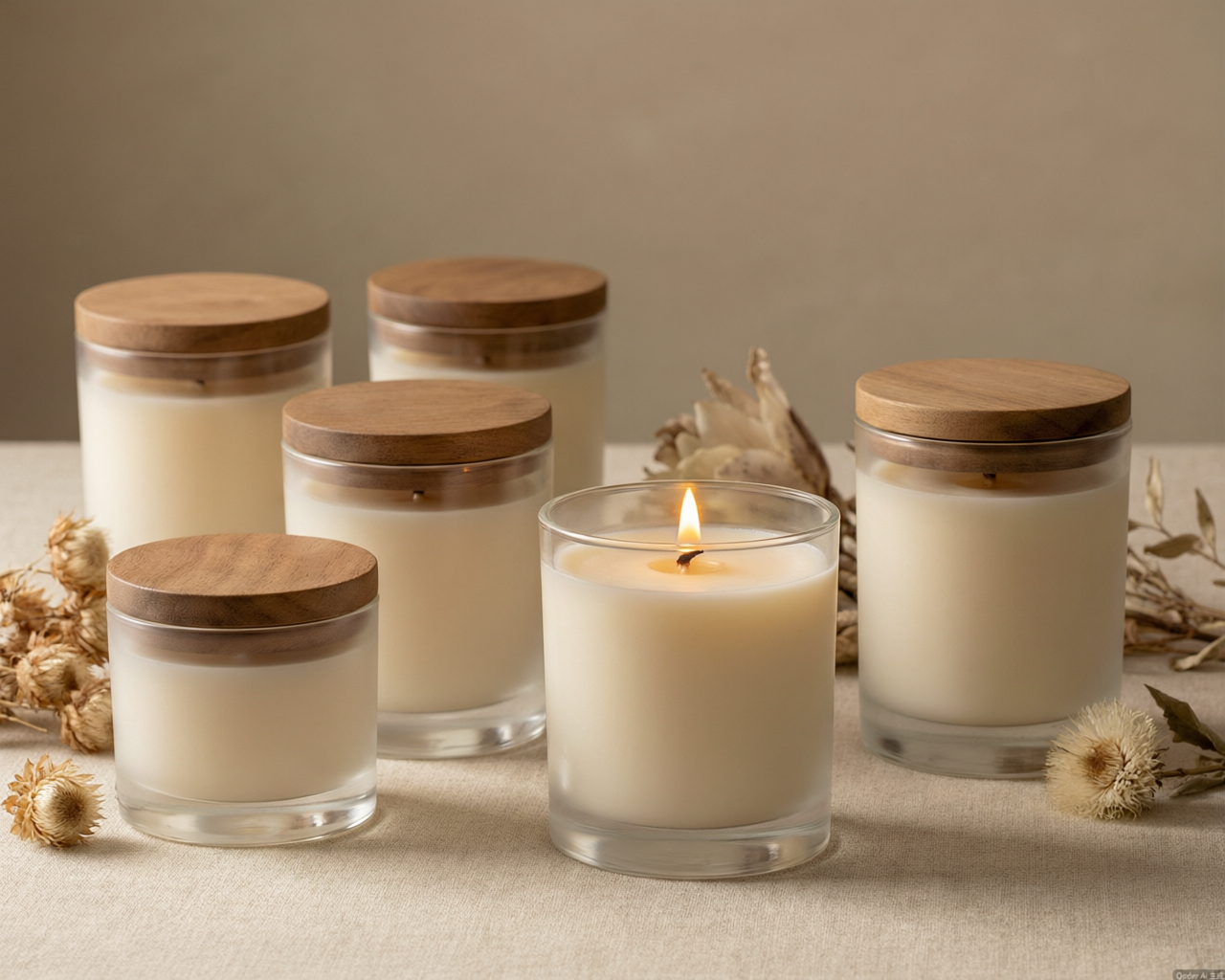
For a standard 8 oz (227 g) soy wax candle in a glass jar with custom label:
| Order Volume | Unit Cost (FOB) | Lead Time |
|---|---|---|
| 1,000 units | $2.80 - $4.50 | 25-35 days |
| 5,000 units | $2.20 - $3.60 | 30-40 days |
| 10,000+ units | $1.80 - $3.00 | 35-50 days |
Custom fragrance development adds $300-$800 per scent. Custom mold fees for unique vessel shapes range from $500-$2,000.
The Sampling and Onboarding Timeline
A realistic timeline from first contact to first shipment:
- Week 1-2: Initial inquiry, factory shortlisting (3-5 candidates), and NDA signing.
- Week 3-4: Sample request. Expect $15-$40 per sample candle plus $30-$60 DHL shipping. Most factories deliver samples in 7-12 days.
- Week 5-6: Sample evaluation, revision requests (allow 1-2 rounds), and fragrance approval.
- Week 7-8: Purchase order confirmation, 30% deposit payment, and production scheduling.
- Week 9-14: Production (25-40 days depending on volume), QC inspection, and balance payment.
- Week 15-18: Ocean freight to destination (14-30 days depending on port).
Total: approximately 14-18 weeks from first email to product arriving at your warehouse.
Red Flags to Avoid
- Factories that refuse third-party inspection (SGS, Bureau Veritas, Intertek).
- Quotes significantly below market rate (under $1.50 for an 8 oz soy candle suggests paraffin substitution or recycled wax).
- No physical address or factory video tour available.
- Inability to provide batch-specific MSDS or IFRA certificates.
- Pressure to pay 100% upfront rather than the standard 30/70 split.
Final Recommendation
Start with a trial order of 1,000-3,000 units before committing to annual volumes. This lets you validate fragrance throw, burn performance, packaging integrity, and communication responsiveness with limited financial exposure.
A well-chosen Chinese candle manufacturer becomes a long-term competitive advantage. The initial 3-4 months of vetting pays for itself within the first two reorder cycles.