Product Guides
Private Label Scented Soap: Bar & Liquid Formulation OEM Guide
Dieser Leitfaden ist noch nicht auf Deutsch verfügbar. Sie lesen die englische Version.
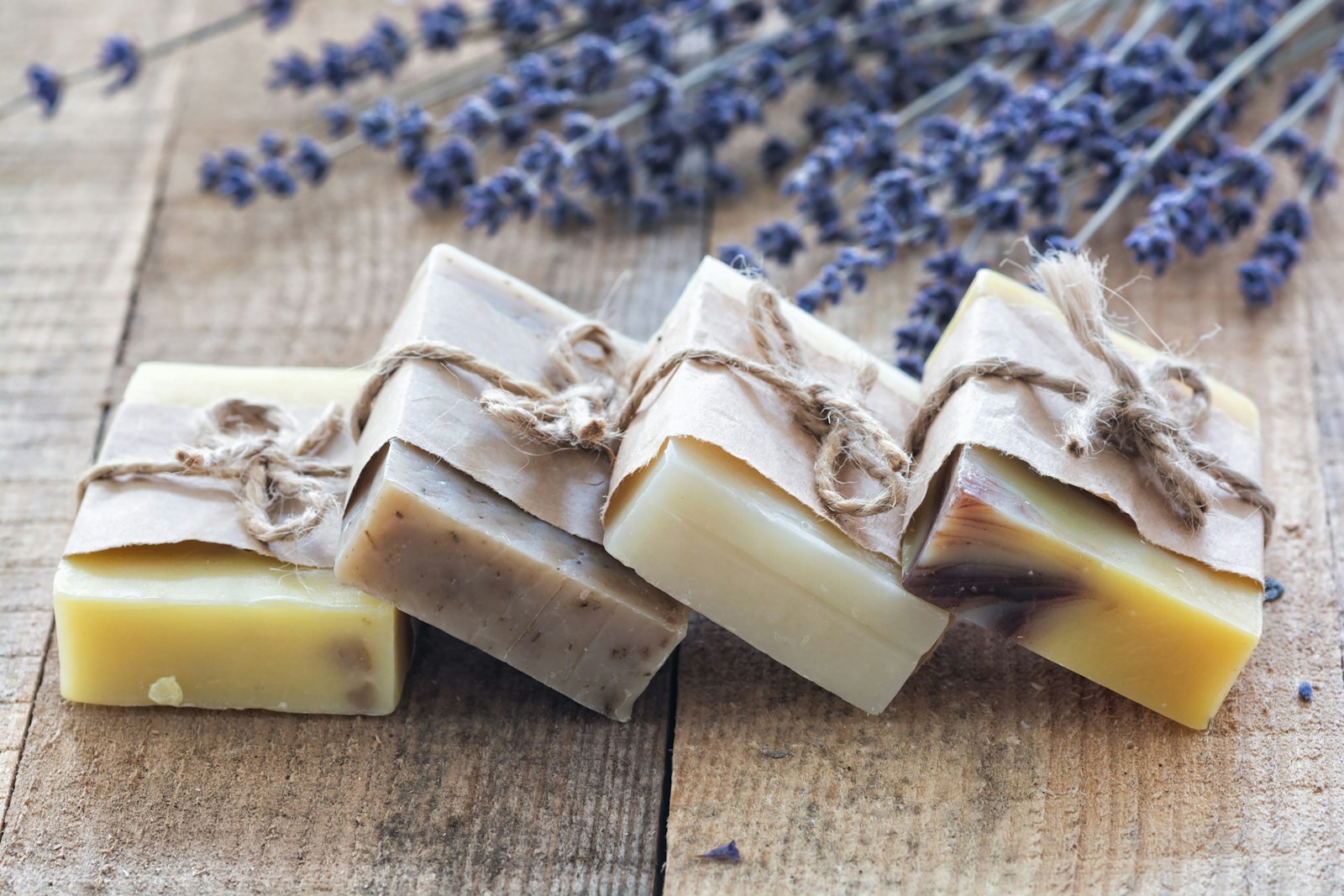
If you run a home fragrance brand or manage procurement for a retail chain, you already know that scented soap is one of the highest-repeat-purchase categories in personal care. The global bar and liquid soap market exceeds USD 24 billion, and private label accounts for roughly 18-22 percent of shelf space in North American and European mass retail. Yet most buyers we speak with hit the same wall: they can source a generic white-label soap in two weeks, but finding an OEM partner who can match a signature fragrance profile, hold scent consistency across 50,000-unit runs, and navigate EU/US regulatory filings is a different conversation entirely.
This guide breaks down exactly what a procurement manager or brand owner needs to evaluate before committing to a private label soap manufacturer. We cover formulation differences between bar and liquid formats, realistic cost structures from Chinese OEM factories, fragrance load specifications, compliance timelines, and a quality-control checklist you can hand directly to your QC team. Whether you are launching a three-SKU artisan bar soap line or scaling a fragranced liquid soap program for 400 retail doors, the numbers and process steps below will save you 60-90 days of back-and-forth sampling.
Bar Soap vs. Liquid Soap: Formulation Fundamentals
Choosing between bar and liquid is not just a packaging decision. The base chemistry determines your fragrance ceiling, shelf life, unit cost, and which certifications you will need.
| Parameter | Cold-Process Bar Soap | Hot-Process Bar Soap | Liquid Soap (Surfactant-Based) |
|---|---|---|---|
| Base ingredients | Saponified oils (olive, coconut, palm) | Saponified oils, accelerated cure | SLES/CAPB/water blend |
| Typical fragrance load | 2-4% of total weight | 2-3% | 0.5-2% |
| Cure/production time | 4-6 weeks cure | 1-2 weeks cure | 3-5 days batching |
| Unit cost (FOB China, 10k MOQ) | USD 0.35-0.85 per 100 g bar | USD 0.30-0.70 per 100 g bar | USD 0.45-1.10 per 250 ml bottle |
| Shelf life (sealed) | 18-24 months | 12-18 months | 24-36 months |
| Scent throw after 6 months | Moderate (top notes fade) | Moderate-low | Strong (encapsulated fragrance option) |
| Key compliance | EU CPNP, US FDA cosmetic listing | EU CPNP, US FDA | EU CPNP, US FDA, plus preservative limits |
Bar soap advantage: Lower per-unit shipping weight, strong “natural” positioning, and higher perceived artisan value. Best for gift sets, hotel amenities, and boutique retail.
Liquid soap advantage: Higher fragrance retention over time, easier to add functional actives (moisturizers, antibacterial agents), and compatible with pump or refill packaging that drives repeat purchase.
Fragrance Selection and Scent Load Specifications
As a fragrance-first OEM, we see buyers underestimate how soap chemistry interacts with perfume compounds. Alkali in bar soap (pH 9-10) will hydrolyze ester-based top notes within weeks if the fragrance oil is not formulated for high-pH stability.
For bar soap: Specify IFRA-compliant fragrance oils rated for Category 9 (rinse-off, high pH). Expect your perfumer to reformulate 1-2 times to lock the dry-down. Budget USD 150-400 per fragrance revision at a Chinese OEM. Typical scent families that survive saponification well: woody, musky, amber, and heavy floral (jasmine, tuberose). Citrus and green notes require encapsulation or a 3-4% load to remain perceptible at month six.
For liquid soap: The near-neutral pH (5.5-7) is far more forgiving. You can use standard fine-fragrance compounds at 0.8-1.5% and still achieve strong cold throw. For a premium “luxury hand wash” positioning, request micro-encapsulated fragrance beads that release scent on friction — this adds roughly USD 0.06-0.12 per unit but dramatically improves consumer scent perception in blind tests.
Actionable tip: Request a 12-week accelerated stability panel (45 degrees C storage) from your OEM before approving any scent. A reputable private label soap manufacturer will run this at no charge for orders above 20,000 units.
OEM Production Process: Timeline from Brief to Bulk
A realistic scented soap OEM program from a Chinese factory follows this sequence:
- Brief and formulation proposal (5-7 days) — You submit target scent references, format preference, packaging specs, and regulatory markets. The OEM returns 2-3 base formulas and a preliminary quotation.
- Lab sampling (10-14 days) — Three to five fragrance iterations shipped via DHL/FedEx. Expect to pay USD 80-200 in sample and courier fees, typically credited against bulk order.
- Stability and compatibility testing (21-30 days) — Accelerated aging, packaging leak tests, and pH verification. This step is non-negotiable for EU market entry.
- Pilot batch (7-10 days) — A 500-1,000 unit run on production equipment to confirm fill weights, label adhesion, and scent consistency at scale.
- Bulk production (15-25 days for 10,000-50,000 units) — Includes saponification or surfactant batching, fragrance addition, molding/filling, curing (bar), and packaging.
- QC inspection and shipping (7-10 days) — Third-party inspection (SGS, Bureau Veritas) plus ocean or rail freight booking.
Total lead time: 65-95 days from signed brief to FOB port. Add 25-35 days for ocean freight to EU/US West Coast, or 15-18 days via China-Europe rail.
MOQ, Unit Costs, and Pricing Structure
Pricing from a scented soap OEM in China is built on four cost layers. Understanding each prevents surprise markups:
Base formulation: USD 0.12-0.40 per unit depending on oil grade (refined palm vs. cold-pressed olive) and surfactant blend (standard SLES vs. sulfate-free glucoside).
Fragrance cost: USD 0.08-0.35 per unit. This is the widest variable. A 3% load of a mid-tier French-origin oil costs roughly 3x a 1.5% load of a domestic compound. Specify whether your quote includes IFRA documentation and allergen declarations.
Packaging: USD 0.10-0.60 per unit. A printed carton sleeve for a bar soap runs USD 0.10-0.22 at 10,000 units; a custom PET bottle with pump for liquid soap runs USD 0.35-0.60.
Labor, overhead, and margin: Typically 20-35% of ex-works cost. Negotiate this down at volumes above 50,000 units per SKU.
Volume discount benchmarks: Most factories offer 8-12% off unit price at 30,000 units and 15-20% at 100,000 units versus a 5,000-unit trial order. Always request a tiered price sheet covering 5k / 10k / 30k / 50k / 100k breakpoints.
Regulatory Compliance and Market-Specific Requirements
Selling scented soap legally requires different filings depending on destination:
European Union: Register on the Cosmetic Products Notification Portal (CPNP) before first sale. You need a Responsible Person (RP) in the EU, a Product Information File (PIF) with a Cosmetic Product Safety Report (CPSR), and full INCI labeling including the 26 EU allergens above 0.01% threshold. Budget USD 800-1,500 per SKU for CPSR preparation through a European toxicologist. Timeline: 3-5 weeks after formula lock.
United States: FDA cosmetic facility registration and product listing under MoCRA (effective 2024). No pre-market approval required, but you must maintain adverse-event records and submit facility registration annually. Labeling must follow 21 CFR 701 with descending-order INCI.
Middle East / GCC: Requires a Certificate of Free Sale plus halal certification if positioning for Saudi or UAE mass retail. Add 2-3 weeks for documentation.
Actionable checklist for your OEM brief:
- Confirm the factory holds ISO 22716 (cosmetics GMP)
- Request IFRA certificates and MSDS for every fragrance compound
- Ask for a 26-allergen declaration template per EU Regulation 1223/2009
- Verify the factory can produce a full INCI list in English within 5 business days of formula approval
Quality Control: What to Inspect Before Accepting Shipment
Even with a trusted OEM, incoming QC protects your brand. For a 10,000-unit order, request AQL 2.5 Level II sampling (roughly 200 units inspected).
Critical checkpoints:
- Fragrance consistency: Compare against approved golden sample using a blind sniff panel of 3+ evaluators. Reject if deviation exceeds 15% panel disagreement.
- pH verification: Bar soap 9.0-10.5; liquid soap 5.0-7.0. Test with a calibrated meter, not strips.
- Fill weight / bar weight: Tolerance of plus or minus 3% per unit, plus or minus 1.5% per carton average.
- Packaging integrity: Label adhesion (3M tape pull test), pump function (50-cycle test on 10 random units), carton crush resistance.
- Microbial limits: Total plate count below 1,000 CFU/g for rinse-off products. Request a COA (Certificate of Analysis) per batch from the factory lab, and run independent verification on 2 random cartons at destination.
Red flags that warrant a hold: Visible oil separation in liquid soap, fragrance “off-notes” suggesting oxidation, label text errors in INCI listing, or missing batch codes.
Choosing the Right OEM Partner
Not every soap factory is equipped for fragrance-driven brands. When evaluating a private label soap manufacturer, score them on these five criteria:
- In-house perfumery capability: Can they reformulate a scent for high-pH stability without outsourcing? Ask for case studies of fragrances they have maintained across 100k+ unit runs.
- Minimum order flexibility: A partner offering 3,000-5,000 unit pilot runs de-risks your launch. Factories demanding 20,000+ upfront limit your ability to test market response.
- Regulatory documentation speed: You should receive a complete PIF-ready dossier (INCI, allergen list, MSDS, stability data) within 10 business days of formula sign-off.
- Fragrance portfolio breadth: Review their product catalog for scent families and format variety. A factory producing reed diffusers, candles, and soaps under one roof can cross-match your brand scent across categories.
- Transparency on sub-suppliers: Know exactly which fragrance house (Givaudan, Firmenich, domestic blender) supplies the oil. This affects cost, IFRA compliance, and reformulation risk if a raw material is discontinued.
A structured OEM program should assign you a dedicated project manager, provide weekly production photo updates, and include a pre-shipment inspection window in the contract.
Next Steps
If you are ready to move from research to sampling, here is a 30-day action plan:
- Week 1: Finalize your brief — format (bar/liquid/both), target markets, 2-3 scent references, packaging direction, and volume forecast for year one.
- Week 2: Submit the brief and request a quote from at least two OEM partners. Compare not just unit price but included services (stability testing, CPNP filing support, design templates).
- Week 3: Receive and evaluate lab samples. Run a 7-day home-use test with 5-10 internal testers. Score scent longevity, lather quality, and packaging ergonomics.
- Week 4: Approve one formula, lock packaging artwork, and issue a purchase order for a pilot batch. Negotiate payment terms of 30% deposit / 70% against pre-shipment inspection.
Private label scented soap is a margin-rich, repeat-purchase category that rewards brands who invest in formulation quality and scent consistency upfront. The OEM partners who treat fragrance as an engineering discipline — not an afterthought — are the ones who will help you build a line that consumers reorder without a second thought.
Ready to discuss your formulation? Browse our product catalog for existing scent profiles, or request a quote for a fully custom bar or liquid soap program tailored to your brand specifications.