Sustainability
Circular Economy in Fragrance: Refill Programs & Take-Back Schemes
Dieser Leitfaden ist noch nicht auf Deutsch verfügbar. Sie lesen die englische Version.
Every year, the global home fragrance industry ships over 1.2 billion glass vessels, aluminum tins, and plastic diffuser bodies into consumer homes — and the vast majority end up in landfill within 90 days of purchase. For brand owners and procurement managers, this linear model is no longer just an environmental concern; it is a commercial liability. Retailers such as Sephora, Selfridges, and major EU grocery chains now require suppliers to demonstrate end-of-life plans for packaging, and the EU Packaging and Packaging Waste Regulation (PPWR), enforceable from 2030, mandates that all packaging be reusable or recyclable by design. If your product line lacks a circular strategy, you risk losing shelf space and facing compliance penalties that can reach 4 percent of annual turnover in key EU markets.
The good news: circular economy fragrance models are commercially viable today, not in some distant future. Candle refill programs, refillable diffuser systems, and fragrance take-back schemes are already generating 18-35 percent higher customer lifetime value for early adopters while cutting per-unit packaging costs by 20-40 percent over a three-year horizon. This guide breaks down exactly how to design, source, and launch a circular fragrance program — with real cost ranges, supplier selection criteria, and a phased rollout timeline you can hand to your operations team this quarter.
Why Circular Models Make Financial Sense for Fragrance Brands
The business case rests on three measurable levers:
- Reduced packaging spend. A standard 200g candle in a glass vessel with lid, box, and insert costs $0.85-$1.40 in packaging alone. A refill pouch or wax cartridge for the same candle costs $0.18-$0.35. Over 50,000 units annually, that saves $33,500-$52,500 in material costs.
- Higher repeat purchase rates. Brands running candle refill programs report 2.4x higher reorder frequency versus single-purchase candle buyers. The refill becomes a subscription-like behavior without the discounting pressure of a formal subscription.
- Regulatory and retail compliance. EU PPWR, UK Extended Producer Responsibility (EPR) fees (GBP 170-210 per tonne of packaging from 2025), and California SB 54 all penalize single-use packaging. A documented take-back or refill system reduces your EPR fee base by 25-60 percent depending on the scheme.
For a mid-size brand doing $2M-$8M in annual fragrance revenue, a well-executed circular program typically pays back its setup investment within 14-22 months.
Designing the Refillable Vessel: Material and Engineering Specs
The vessel is your capital asset in a refillable diffuser business or candle refill program. It must survive 15-30 refill cycles without degrading. Key specifications:
| Component | Recommended Spec | Cost per Unit (MOQ 5,000) | Cycle Life |
|---|---|---|---|
| Candle vessel (glass) | Borosilicate or tempered soda-lime, 3mm+ wall | $1.10-$1.80 | 25-40 cycles |
| Candle vessel (aluminum) | Anodized 6063 alloy, 1.2mm wall | $1.40-$2.20 | 30-50 cycles |
| Reed diffuser bottle | Thick-base glass (400g+), narrow neck 18-22mm | $0.90-$1.50 | 20-35 cycles |
| Diffuser cap/collar | Stainless steel or anodized aluminum, silicone gasket | $0.35-$0.60 | 25+ cycles |
| Car fragrance housing | ABS or zinc alloy with clip mount | $0.80-$1.60 | 20-30 cycles |
Design rules that prevent failure:
- Avoid adhesives. Use mechanical press-fit or threaded connections so consumers can disassemble for cleaning. Adhesive-bonded collars fail after 4-6 heat cycles.
- Standardize the refill interface. Pick one neck diameter or cartridge bayonet across your entire SKU range. This lets you offer multiple scents without tooling new molds.
- Specify dishwasher-safe materials. If the vessel cannot survive a 65-degree-C wash cycle, return rates on refills climb because residue buildup causes scent contamination.
When sourcing from a Chinese OEM, request drop-test reports (1.2m onto concrete, 3 sides) and thermal shock data (0-100 degree C, 10 cycles) before committing to tooling. Aromiso’s OEM program provides these test certificates as standard on all refillable vessel projects.
Refill Formats: Pouches, Cartridges, and Wax Melts
Choosing the right refill format determines your logistics cost, consumer convenience score, and recyclability rating.
- Aluminum foil pouches (liquid refills). Best for reed diffusers and room sprays. Weight: 8-15g empty. Shipping cost per unit drops 60-70 percent versus glass. Recyclable in mono-material PE/PE structures; avoid PET/AL/PE laminates that are unrecyclable in most municipal streams.
- Wax refill cartridges. Best for candle programs. Pre-poured soy or coconut wax discs in compostable paper trays. Consumer drops the cartridge into the vessel, no melting or mess. Unit cost: $0.55-$0.95 for a 180g refill at 10,000 MOQ.
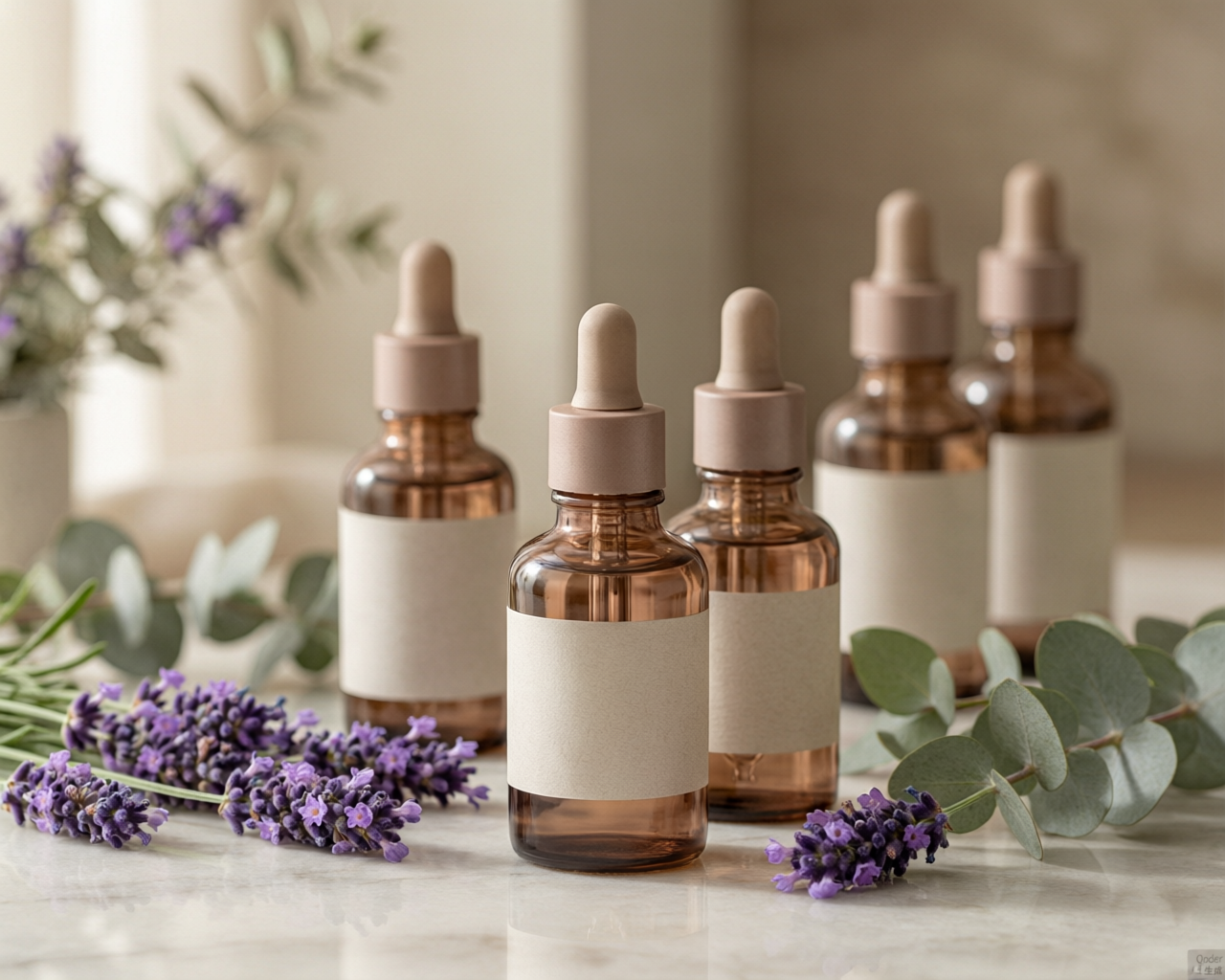
- Concentrated oil vials. Best for car fragrances and electric diffusers. 5-10ml amber glass or aluminum vials with dropper. Highest margin per ml but requires child-resistant closures for EU CLP compliance (adds $0.08-$0.12 per unit).
- Returnable aluminum canisters. Best for B2B and hospitality clients. 1L-5L sealed canisters shipped on a deposit scheme (typically $3-$8 deposit per canister). Return rate in commercial settings exceeds 92 percent.
Match the format to your channel: DTC e-commerce favors lightweight pouches (low shipping weight), while retail and hospitality favor cartridges and canisters (premium unboxing, easy staff handling).
Implementing a Take-Back Scheme: Logistics and Incentives
A fragrance take back scheme closes the loop by recovering empty vessels for cleaning, inspection, and reuse. Here is a working framework:
Step 1 — Collection points. Partner with your retail stockists for in-store drop bins (cost: $40-$80 per branded bin) or include a prepaid return label in each refill shipment (cost: $0.60-$1.20 per label domestically, $2.50-$4.00 for cross-border).
Step 2 — Incentive structure. Offer 10-15 percent off the next refill for each returned vessel, or a “5 returns = 1 free refill” loyalty mechanic. Brands using a 12 percent discount incentive see 55-70 percent return rates; no-incentive programs average only 15-25 percent.
Step 3 — Inspection and grading. Returned vessels need a 3-point check: cracks or chips (reject), residue buildup (industrial wash at 70 degrees C, $0.04-$0.08 per unit), label and collar integrity (re-label at $0.03 per unit). Expect 8-12 percent rejection rate in year one, dropping to 4-6 percent as consumers learn proper care.
Step 4 — Reverse logistics partner. In the EU, use aggregated return networks like RePack or Loop by TerraCycle. In North America, UPS Returns or FedEx Ground reverse programs offer per-parcel rates of $3.50-$6.00. For China-domestic operations, SF Express reverse logistics runs RMB 6-12 per parcel.
Budget $0.35-$0.90 per vessel for the full clean-inspect-redeploy cycle. Compare that to $1.10-$2.20 for a new vessel and the economics are clear after the first return.
Packaging, Labeling, and Compliance Checklist
Circular products still must meet all fragrance safety and packaging regulations. Before launch, verify:
- CLP/GHS labeling on both the vessel and the refill pack. Refill pouches need full hazard pictograms, signal words, and UFI codes — they are not exempt because they are “secondary” packaging.
- EU PPWR reusable packaging criteria. The vessel must be designed for a minimum of 10 reuse cycles (your spec should target 20+), and you must have a system in place to facilitate reuse. Document your cycle-life testing.
- Recycled content declarations. If your refill pouch uses 30 percent PCR content, you need a mass-balance certificate from your film supplier. EU Green Claims Directive (effective 2026) prohibits vague “eco-friendly” language without substantiation.
- EPR registration. Register with each country’s producer responsibility scheme (e.g., LUCID in Germany, CITEO in France, Valpak in the UK). Report refill packaging separately from single-use packaging to reduce fee calculations.
- Child-resistant and tamper-evident features. Required for concentrated fragrance oils above certain thresholds under CLP Article 35 and US Poison Prevention Packaging Act.
A practical tip: build a compliance matrix in your PLM system that maps each SKU to its applicable regulations. Update it quarterly. Non-compliance fines in the EU average EUR 15,000-50,000 per infraction, and retail delisting can cost far more.
Choosing a Manufacturing Partner for Circular Products
Not every fragrance factory can execute a refillable diffuser business model. Screen suppliers against these criteria:
- Tooling capability. Can they produce thick-wall glass or precision aluminum housings in-house, or do they subcontract? Subcontracted tooling adds 3-6 weeks to lead time and fragments quality control.
- Refill filling lines. Liquid refills require dedicated filling lines with nitrogen purging to prevent oxidation. Ask for line speed (target: 2,000-4,000 units/hour) and minimum batch size.
- Material traceability. Request batch-level certificates for glass composition, alloy grade, and wax origin. Circular programs demand full material passports for EPR reporting.
- MOQ flexibility. Year one volumes for a new refill SKU are often 3,000-8,000 units. A partner with a 50,000-unit MOQ will force you into excess inventory. Negotiate a tiered MOQ: 5,000 for launch, scaling to 20,000 by month nine.
- Sustainability certifications. ISO 14001, FSC-certified paper packaging, and RSPO or ISCC-certified wax/oil supply chains are baseline expectations for EU and North American retail buyers.
Review the product catalog to see which vessel formats and refill systems are already in production — this reduces your tooling risk and shortens time to market by 6-10 weeks versus a fully custom build.
Phased Rollout Timeline: From Pilot to Scale
A realistic 12-month rollout for a mid-size brand:
- Months 1-2: Feasibility and design. Finalize vessel specs, select refill format, get 3 supplier quotes. Budget: $3,000-$6,000 in sampling and testing fees.
- Months 3-4: Tooling and sampling. Approve T1 samples, run drop and thermal tests, confirm refill seal integrity over 6 months accelerated aging. Tooling cost: $2,500-$8,000 per vessel SKU.
- Months 5-6: Pilot production. Produce 3,000-5,000 units. Launch to a waitlist or loyalty segment (500-1,000 customers). Track return intent via post-purchase survey.
- Months 7-9: Iterate and expand. Adjust incentive structure based on pilot return rates (target 40 percent+). Add 2-3 refill scent variants. Onboard retail partners for in-store collection.
- Months 10-12: Scale. Increase production to 15,000-25,000 units per quarter. Activate reverse logistics contracts. Publish your first circular impact report (vessels saved, CO2 avoided) for retail ESG scorecards.
Total program investment for a single vessel line: $25,000-$55,000 in year one, inclusive of tooling, compliance, pilot inventory, and marketing collateral. Break-even typically lands at month 14-22 depending on refill attach rate.
Measuring Impact: KPIs That Matter to Buyers and Retailers
Retail partners and institutional buyers will ask for data. Track these from day one:
- Refill attach rate. Percentage of vessel buyers who purchase at least one refill within 6 months. Target: 35-50 percent in year one.
- Vessel return rate. Percentage of empty vessels recovered. Target: 40 percent with incentives, 70 percent with deposit schemes.
- Packaging waste avoided. Kilograms of glass, aluminum, and cardboard diverted per 1,000 units sold. A typical 200g candle refill avoids 280-350g of packaging versus a new vessel purchase.
- Carbon reduction. Each reused glass vessel saves approximately 0.4-0.6 kg CO2e versus manufacturing a new one (based on container glass LCA data from FEVE). Multiply by your return volume for a credible claim.
- Customer lifetime value uplift. Compare 12-month LTV of refill customers versus single-purchase buyers. Expect a 25-45 percent uplift.
Report these quarterly to your retail accounts. Buyers at major chains increasingly tie listing renewals to demonstrated sustainability KPIs, not just aspirational pledges.
Next Steps
A circular economy fragrance program is no longer a differentiator — it is table stakes for any brand selling into regulated EU, UK, and North American retail channels. The brands that move now lock in tooling capacity, build consumer refill habits, and accumulate the impact data that wins premium shelf space in 2027 and beyond.
If you are evaluating a candle refill program, a refillable diffuser business line, or a full fragrance take back scheme, start with a supplier conversation. Aromiso’s engineering team can provide vessel cycle-life data, refill format samples, and a landed-cost model for your target market within 5 business days.
Browse the product catalog for existing refillable formats, explore the OEM program for custom tooling options, or request a quote with your target specs, annual volume, and destination market. The sooner you lock in your circular architecture, the faster you turn a compliance obligation into a revenue engine.