Sourcing & Procurement
How Much Does Private Label Candle Manufacturing Cost?
Dieser Artikel ist noch nicht auf Deutsch verfügbar. Sie lesen die englische Version.
Budgeting accurately for private label candle manufacturing requires understanding every cost layer beyond the quoted unit price. A candle that costs $2.50 FOB may land at $4.80 in your warehouse after shipping, duties, and ancillary expenses. This guide breaks down the full cost structure so B2B buyers can forecast margins with confidence.
Base Manufacturing Cost Components
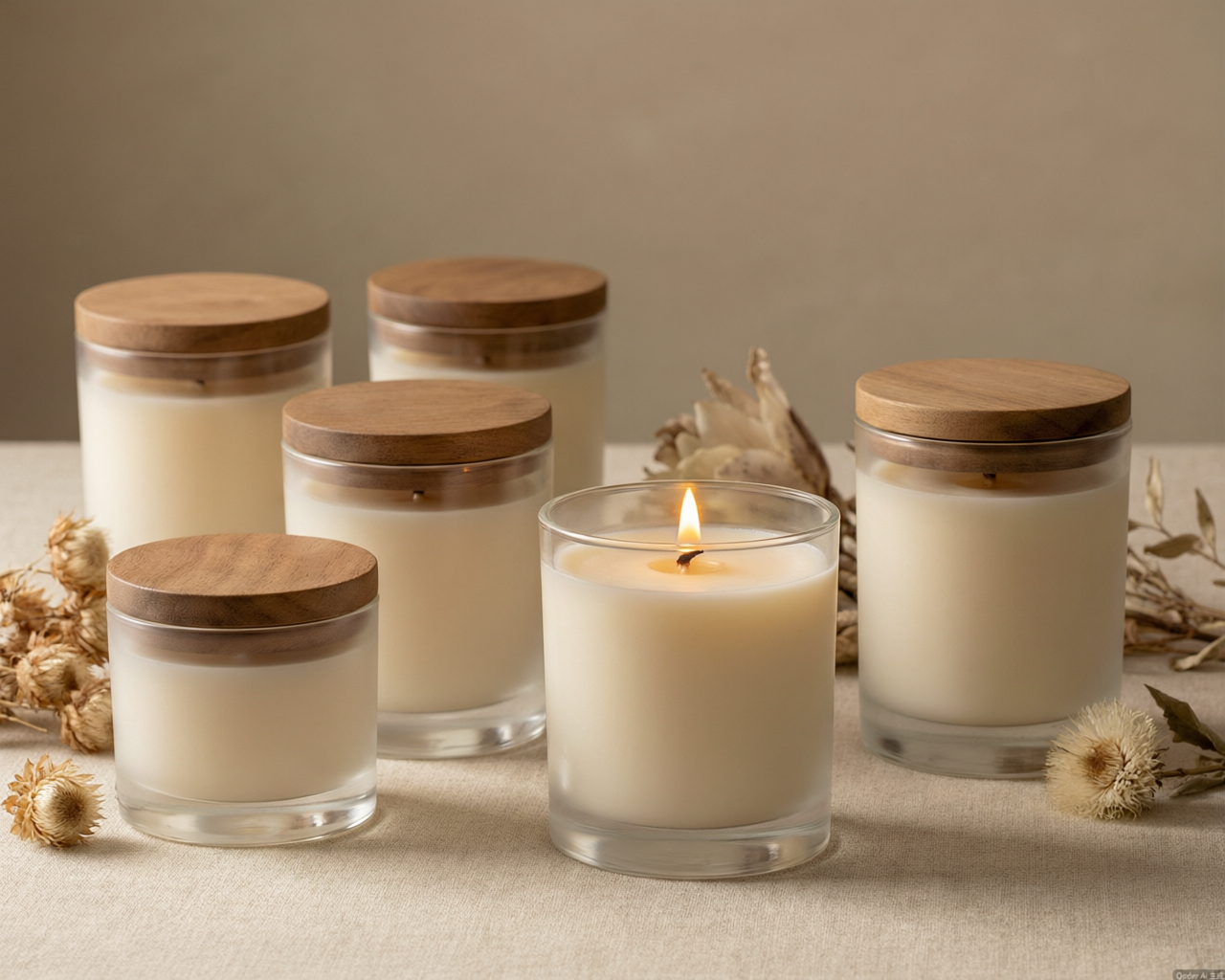
For a standard 8 oz (227 g) soy wax candle in a glass jar with a single wick, the factory cost breaks down as follows:
Raw Materials (55-65% of unit cost)
| Component | Cost per Unit | Notes |
|---|---|---|
| Soy wax (227 g) | $0.55 - $0.85 | Cargill or Sinopec sourced; coconut blend adds $0.15 |
| Fragrance oil (6-10% load) | $0.40 - $1.20 | Depends on complexity; simple scents at low end |
| Glass vessel (8 oz) | $0.35 - $0.70 | Stock shape; custom molds add amortized cost |
| Wick (cotton or wood) | $0.05 - $0.25 | Wood wicks cost 3-4x cotton |
| Label and lid | $0.10 - $0.35 | Kraft label + metal lid at low end |
Total raw materials: $1.45 - $3.35 per unit.
Labor and Overhead (20-25% of unit cost)
Chinese candle factories in Guangdong and Zhejiang pay production workers $450-$700/month. Labor cost per candle is typically $0.20-$0.50, covering:
- Wax melting and temperature control
- Fragrance blending and pouring
- Wick centering and curing
- Quality inspection
- Packaging assembly
Overhead (facility, utilities, equipment depreciation) adds $0.15-$0.35 per unit at standard production volumes.
Factory Margin (10-20%)
Manufacturers operate on 10-20% gross margins for private label work. High-volume orders (10,000+ units) compress margins toward 10%, while small orders (500-1,000 units) command 18-25% margins to offset setup inefficiency.
Volume-Based Pricing Tiers
For an 8 oz soy candle with custom fragrance and label:
| Order Quantity | FOB Unit Price | Effective Margin for Buyer |
|---|---|---|
| 500 units | $3.80 - $5.00 | Tight; suitable for market testing only |
| 1,000 units | $3.00 - $4.20 | Workable for DTC brands |
| 3,000 units | $2.40 - $3.50 | Standard wholesale tier |
| 5,000 units | $2.10 - $3.10 | Volume discount applies |
| 10,000+ units | $1.80 - $2.70 | Best pricing; annual contract recommended |
Additional Cost Factors
Custom Fragrance Development
- Initial development: $300 - $800 per scent
- Revision rounds (beyond 2): $100 - $200 per round
- Exclusive formulation agreement: $500 - $2,000 one-time fee
Custom Vessel or Packaging Molds
- Glass mold (new shape): $1,000 - $3,000
- Ceramic mold: $1,500 - $4,000
- Custom box die-cut: $300 - $800
- Amortization: Spread over first production run; at 5,000 units, a $2,000 mold adds $0.40/unit
Compliance and Testing
- SGS or Intertek pre-shipment inspection: $200 - $450 per shipment
- Burn testing report (ASTM F2417): $150 - $300 per SKU
- SDS and IFRA documentation: Usually included by manufacturer
- EU CLP label design: $100 - $250 per SKU (if not provided by factory)
Shipping and Logistics
| Route | Method | Cost (per CBM) | Transit Time |
|---|---|---|---|
| China to US West Coast | Ocean (FCL 20ft) | $2,500 - $4,500 | 14-18 days |
| China to US East Coast | Ocean (FCL 20ft) | $3,500 - $6,000 | 25-32 days |
| China to EU (Hamburg) | Ocean (FCL 20ft) | $2,000 - $4,000 | 28-35 days |
| China to UK | Ocean (FCL 20ft) | $2,200 - $4,200 | 30-38 days |
| Any route | Air freight | $6 - $12/kg | 3-7 days |
A 20 ft container holds approximately 8,000-12,000 candles (depending on packaging dimensions), making ocean freight cost $0.25-$0.50 per unit for full-container loads.
Import Duties and Taxes
- USA: Candles (HS 3406) face 3.5% base duty. Section 301 tariffs on Chinese goods may add 7.5-25%. Verify current rates before ordering.
- EU: 0% duty on candles (HS 3406). VAT at 19-27% applies at import.
- UK: 0% duty. 20% VAT at import.
- Australia: 5% duty. 10% GST.
Total Landed Cost Example
Scenario: 3,000 units of 8 oz soy candles shipped to Los Angeles.
| Cost Item | Amount |
|---|---|
| Product cost (3,000 x $2.80) | $8,400 |
| Custom fragrance development (2 scents) | $1,000 |
| Pre-shipment inspection | $300 |
| Ocean freight (LCL, 4 CBM) | $1,800 |
| Marine insurance (0.5% of CIF) | $55 |
| US customs duty (3.5% + 25% Section 301) | $2,739 |
| Customs broker fee | $250 |
| Inland trucking (port to warehouse) | $400 |
| Total landed cost | $14,944 |
| Per-unit landed cost | $4.98 |
At a retail price of $24-$32 per candle, this yields a gross margin of 79-84% before marketing and operations.
Hidden Costs Buyers Overlook
- Sample iteration costs: 3-4 rounds of sampling at $30-$60 per shipment adds $120-$240 before production begins.
- Currency fluctuation: A 3% RMB appreciation between quote and payment increases your effective cost by the same percentage.
- Storage and demurrage: If customs clearance delays exceed 5 free days, port storage charges of $75-$200/day accumulate.
- Defect replacement shipping: If 2% of units fail QC and replacements ship by air, budget $200-$500 for express freight.
- Annual compliance renewals: Some certifications (UL, specific retailer requirements) require annual renewal fees of $500-$2,000.
Cost Optimization Strategies
- Consolidate SKUs: Fewer unique vessels and fragrances reduce setup costs and increase per-SKU volume.
- Order during off-peak: Factories offer 5-10% discounts for production scheduled in March-April or June-July (avoiding the August-October holiday rush).
- Negotiate annual contracts: Committing to $30,000-$50,000 annual volume locks pricing and often includes free custom development.
- Use stock vessels: Custom molds save money only above 20,000 units. Below that, stock options are more economical.
- Ship FCL when possible: A full 20 ft container costs less per unit than two LCL shipments of equivalent volume.
Summary
Private label candle manufacturing in China delivers 40-60% cost savings versus US or EU production, but the true landed cost includes 6-10 line items beyond the factory quote. Build your budget model with all components above, and validate assumptions with a trial order before scaling. The brands that succeed treat manufacturing cost as a system, not a single number.