Cost & Pricing
Luxury Packaging Cost Premium: Is It Worth It for Fragrance Brands?
Dieser Artikel ist noch nicht auf Deutsch verfügbar. Sie lesen die englische Version.

Packaging is no longer an afterthought in the fragrance industry. For B2B buyers sourcing candles, diffusers, and essential oil products from contract manufacturers, the packaging decision directly shapes perceived value, retail acceptance, and ultimately margin. But luxury packaging carries a significant cost premium. Understanding exactly what that premium buys, and when it pays for itself, is essential for any brand planning its product lineup.
The Baseline: Standard Packaging Costs
Before evaluating the premium, it helps to establish what standard packaging costs look like for fragrance products manufactured in China.
For a typical 200ml candle in a glass jar, standard packaging (a simple kraft or white cardboard box with one-color printing) runs approximately $0.15 to $0.35 per unit at volumes of 3,000 pieces or more. A basic label on the jar itself adds $0.03 to $0.08. For essential oil bottles (10ml to 30ml), a standard folding carton costs $0.08 to $0.20 per unit.
These figures cover functional protection during shipping and minimal shelf presence. They work for value-tier products, private-label commodity lines, and bulk wholesale where the buyer repackages downstream.
What Luxury Packaging Actually Costs
Luxury packaging introduces multiple cost layers. Here is a realistic breakdown for a mid-to-premium fragrance product:
Rigid setup boxes (lid-and-base or magnetic closure): $1.20 to $3.50 per unit depending on size, material thickness (typically 2mm to 3mm greyboard wrapped in art paper), and order volume. At 1,000 units, expect the higher end; at 10,000+, costs drop 25 to 40 percent.
Surface finishing: Soft-touch lamination adds $0.15 to $0.30 per unit. Spot UV, foil stamping (gold, silver, or holographic), and embossing each add $0.10 to $0.40 depending on coverage area and number of passes.
Custom inserts: EVA foam, velvet-lined, or molded pulp inserts to cradle bottles range from $0.30 to $1.20 per set. Magnetic closure mechanisms add $0.20 to $0.50.
Specialty papers and wraps: Textured stocks (linen, cotton-feel), metallic papers, or handmade wraps can push material costs up by $0.40 to $1.00 per unit compared to standard coated art paper.
Printing complexity: Four-color offset plus Pantone matching adds $0.10 to $0.25 versus single-color. Digital printing for short runs (under 500 units) costs $0.50 to $1.50 more per unit than offset but eliminates plate fees ($150 to $400 per color).
In total, a fully loaded luxury package for a single candle or fragrance bottle typically lands between $2.50 and $7.00 per unit at moderate volumes (3,000 to 5,000 pieces). Ultra-premium presentations with rigid boxes, multiple finishing techniques, and custom hardware can exceed $10.00 per unit.
The Premium Multiplier
Compared to standard packaging, luxury packaging represents a 5x to 20x cost increase. On a product with a factory unit cost (fill, vessel, fragrance) of $2.00 to $4.00, packaging can shift from 5 to 10 percent of total unit cost to 40 to 65 percent.
This shift fundamentally changes the product economics. A candle that costs $3.50 to produce with standard packaging might cost $7.00 to $9.00 with luxury packaging. The question is whether the retail price can absorb that increase with margin to spare.
When the Premium Pays Off
Luxury packaging delivers measurable returns in specific scenarios:
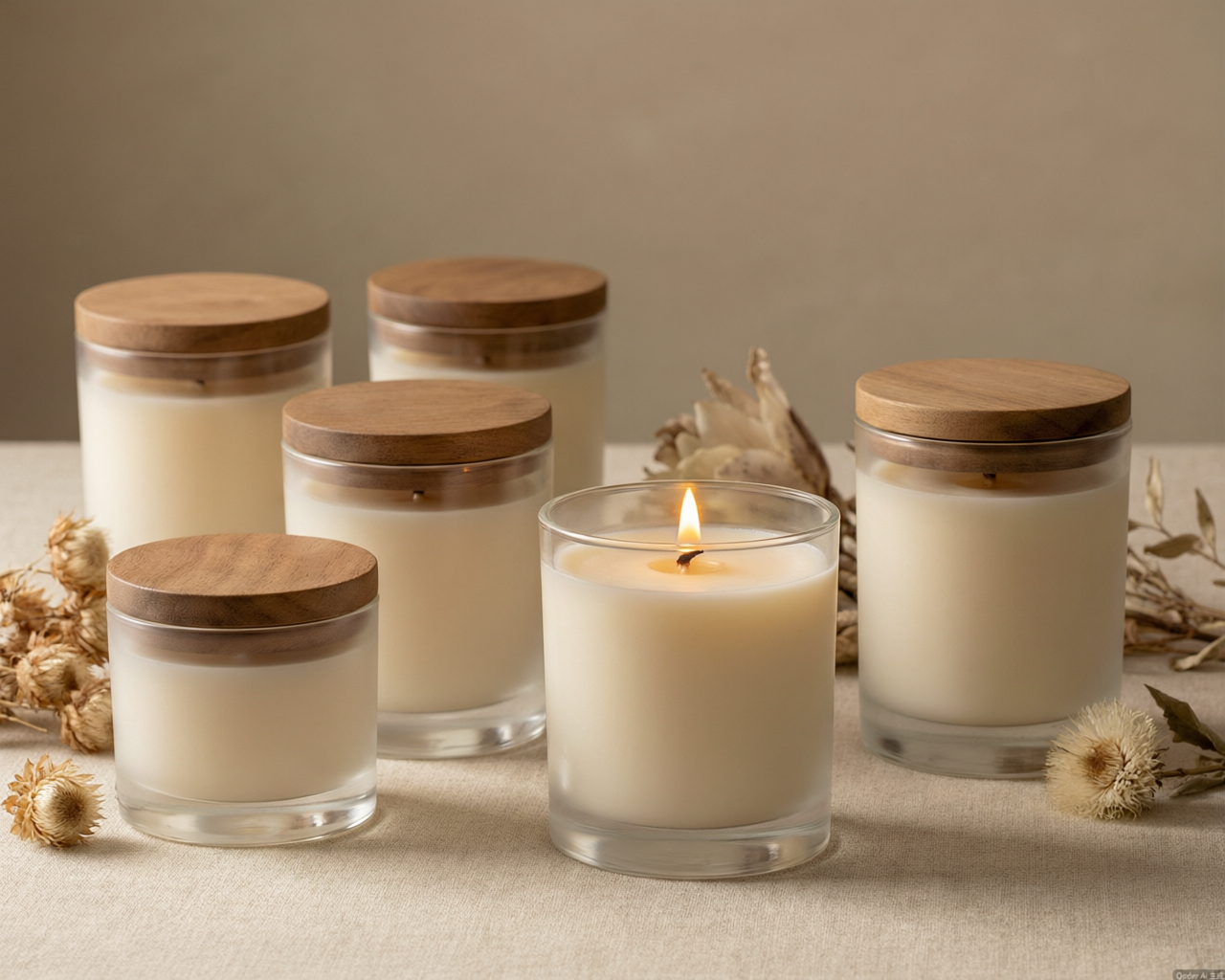
Retail shelf competition. In department stores and specialty boutiques, products compete visually within arm’s reach. Brands selling at $45 to $80 retail price points are expected to present rigid boxes, foil details, and quality inserts. Skipping these elements at that price tier creates a perception gap that suppresses sell-through.
Gifting and unboxing. Fragrance products are purchased as gifts at rates of 35 to 50 percent depending on the category. Luxury packaging transforms the product into a ready-made gift, reducing the buyer’s need for additional wrapping and increasing average transaction value by $8 to $15 in retail settings.
Brand equity and repeat purchase. Consistent premium presentation builds recognition. Brands that invest in signature packaging elements (a specific closure mechanism, a recognizable texture) report 15 to 25 percent higher repeat purchase rates compared to brands that rotate generic packaging.
DTC and subscription models. For direct-to-consumer brands, the unboxing experience is the primary brand touchpoint. Social sharing of premium packaging generates organic reach valued at $2.00 to $5.00 per impression in equivalent ad spend.
When to Skip the Premium
Luxury packaging is not universally justified. Consider standard or mid-tier packaging when:
- Your product retails below $25 and margins cannot absorb a $3.00+ packaging cost.
- You sell primarily through bulk wholesale channels where the retailer repackages or displays product without outer cartons.
- You are in a testing phase (first 500 to 1,000 units) and need to validate the fragrance itself before committing to tooling and minimum order quantities for custom packaging.
- Sustainability positioning is central to your brand, and your target buyer actively prefers minimal, recyclable packaging over rigid boxes.
Practical Cost-Control Strategies
For brands that want a luxury feel without the full premium:
- Hybrid approach: Use a standard folding carton with one premium element (foil logo, soft-touch finish) for $0.60 to $1.20 total instead of a full rigid box at $3.00+.
- Consolidate SKUs: Design one box size that fits multiple products with interchangeable inserts, spreading tooling costs ($500 to $1,500 for a custom die) across more units.
- Order packaging in larger batches: Packaging MOQs of 5,000 to 10,000 units can reduce per-unit cost by 30 to 45 percent versus 1,000-unit runs, even if it means holding 3 to 6 months of packaging inventory.
- Negotiate with your manufacturer: Many Chinese fragrance factories, including Aromiso, bundle packaging sourcing into the unit quote, leveraging their supplier relationships to secure 10 to 20 percent below what a brand would pay sourcing independently.
The Decision Framework
Calculate your packaging cost as a percentage of landed cost (product + packaging + freight + duties). If luxury packaging pushes that ratio above 35 percent, scrutinize whether your retail channel and price point support it. If it stays below 25 percent and your positioning demands premium presentation, the investment typically returns within two to three reorder cycles through higher wholesale acceptance and retail sell-through.
The right packaging tier is not the most expensive option. It is the one that matches your buyer’s expectations at the price point you command, while leaving enough margin to sustain growth.